View 1 of 5 · select a photograph to enlarge
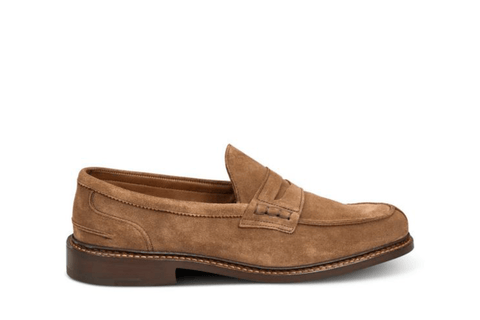
Adam Penny Loafer - New Brown Suede
Adam penny loafer - The loafer style dates back to Norway in the early 1930s. Taking inspiration from the moccasin shoes worn by native Americans in North America, and the simple slip-ons on the feet of Norwegian fishermen, the first design was born. Popularity grew and export orders were sent across Europe and America. Esquire magazine even featured an article with photographs of Norwegian farmers wearing the shoe in cattle loafing sheds.Soon after, the Spaulding family of New Hampshire, USA, began manufacturing a similar shoe, called the Loafer. This name later became a generic term used to describe a slip-on, moccasin shoe.In 1934, G. H. Bass made his first version of the loafer which he called Weejuns. This appears to be a play on words on the origin of the original designer. A distinctive feature of this new design was a strip of leather stitched across the saddle of the shoe, featuring a shaped cutout.In 1950s America before trainers were invented, the Weejun became the shoe of choice for young men and students. It became fashionable to keep a dime in the half moon cut out slot of the leather strip. This eventually gave the shoes their colloquial name of Penny Loafer, which is still used today. The Description The Leather Castorino Suede is a high-quality, full reverse suede. Reverse suede - also known as full-grain suede - is better quality than split suede which some shoemakers use. In Castorino Suede the full-grain leather and skin of a hide are left intact and the flesh side is the suede. Castorino is extremely lightweight and features a very fine nap. Need more help? Try our Live Chat . The Fit This last has been used for our City shoes for many years. The size (length fitting) of Tricker’s footwear made on this last (11659) is true to size, we recommend sticking to your regular than a regular UK. If you are unsure of your UK size, use our size guide to convert your known size to a UK size. Need more help? Try our Fit Assistant or contact our Live Chat . The Sole The Ultra Flex Leather Sole - Tricker’s Ultra-flex shoes have been designed with unlined uppers combined with our unique single Ultra-flex leather soles to provide flexible, slipper-like comfort without any compromise on quality or durability. It is hard wearing and offers ultimate levels of comfort. Need more help? Try our Live Chat . Shipping Information All shoe and boot orders are delivered in plain packaging containing the distinctive blue Tricker's shoe box and complete with a complimentary Tricker's shoe bag and polishing cloth. For orders of £100 and over: UK: 1-2 working days - Free Delivery EU: 2-5 working days - Free Delivery USA: 1-5 working days - Free Delivery Japan: 3-7 working days - £25.00 Delivery Hong Kong: 3-7 working days - £25.00 Delivery Rest of World: 3-7 working days - Free Delivery For orders below £100 (UK £50): UK: 1-2 working days - £3.50 EU: 2-5 working days - €25.00 Delivery USA: 1-5 working days - £25.00 Delivery Rest of World: 3-7 working days - £25.00 Delivery For more details, please see our Delivery & Returns Guide . Need more help? Try our Live Chat . The Description The Leather Castorino Suede is a high-quality, full reverse suede. Reverse suede - also known as full-grain suede - is better quality than split suede which some shoemakers use. In Castorino Suede the full-grain leather and skin of a hide are left intact and the flesh side is the suede. Castorino is extremely lightweight and features a very fine nap. Need more help? Try our Live Chat . The Fit This last has been used for our City shoes for many years. The size (length fitting) of Tricker’s footwear made on this last (11659) is true to size, we recommend sticking to your regular than a regular UK. If you are unsure of your UK size, use our size guide to convert your known size to a UK size. Need more help? Try our Fit Assistant or contact our Live Chat . The Sole The Ultra Flex Leather Sole - Tricker’s Ultra-flex shoes have been designed with unlined uppers combined with our unique single Ultra-flex leather soles to provide flexible, slipper-like comfort without any compromise on quality or durability. It is hard wearing and offers ultimate levels of comfort. Need more help? Try our Live Chat . Shipping Information All shoe and boot orders are delivered in plain packaging containing the distinctive blue Tricker's shoe box and complete with a complimentary Tricker's shoe bag and polishing cloth. For orders of £100 and over: UK: 1-2 working days - Free Delivery EU: 2-5 working days - Free Delivery USA: 1-5 working days - Free Delivery Japan: 3-7 working days - £25.00 Delivery Hong Kong: 3-7 working days - £25.00 Delivery Rest of World: 3-7 working days - Free Delivery For orders below £100 (UK £50): UK: 1-2 working days - £3.50 EU: 2-5 working days - €25.00 Delivery USA: 1-5 working days - £25.00 Delivery Rest of World: 3-7 working days - £25.00 Delivery For more details, please see our Delivery & Returns Guide . Need more help? Try our Live Chat . Adam penny loafer - The loafer style dates back to Norway in the early 1930s. Taking inspiration from the moccasin shoes worn by native Americans in North America, and the simple slip-ons on the feet of Norwegian fishermen, the first design was born. Popularity grew and export orders were sent across Europe and America. Esquire magazine even featured an article with photographs of Norwegian farmers wearing the shoe in cattle loafing sheds. Soon after, the Spaulding family of New Hampshire, USA, began manufacturing a similar shoe, called the Loafer. This name later became a generic term used to describe a slip-on, moccasin shoe. In 1934, G. H. Bass made his first version of the loafer which he called Weejuns. This appears to be a play on words on the origin of the original designer. A distinctive feature of this new design was a strip of leather stitched across the saddle of the shoe, featuring a shaped cutout. In 1950s America before trainers were invented, the Weejun became the shoe of choice for young men and students. It became fashionable to keep a dime in the half moon cut out slot of the leather strip. This eventually gave the shoes their colloquial name of Penny Loafer, which is still used today. Adam penny loafer - The loafer style dates back to Norway in the early 1930s. Taking inspiration from the moccasin shoes worn by native Americans in North America, and the simple slip-ons on the feet of Norwegian fishermen, the first design was born. Popularity grew and export orders were sent across Europe and America. Esquire magazine even featured an article with photographs of Norwegian farmers wearing the shoe in cattle loafing sheds. Soon after, the Spaulding family of New Hampshire, USA, began manufacturing a similar shoe, called the Loafer. This name later became a generic term used to describe a slip-on, moccasin shoe. In 1934, G. H. Bass made his first version of the loafer which he called Weejuns. This appears to be a play on words on the origin of the original designer. A distinctive feature of this new design was a strip of leather stitched across the saddle of the shoe, featuring a shaped cutout. In 1950s America before trainers were invented, the Weejun became the shoe of choice for young men and students. It became fashionable to keep a dime in the half moon cut out slot of the leather strip. This eventually gave the shoes their colloquial name of Penny Loafer, which is still used today. Availability
Price
£681.75
Product specifications
- Brand
- R E Tricker Ltd
- SKU
- 7956-6.5